 +91 72075 17771
 drnitesh.gastrosurgeon@gmail.com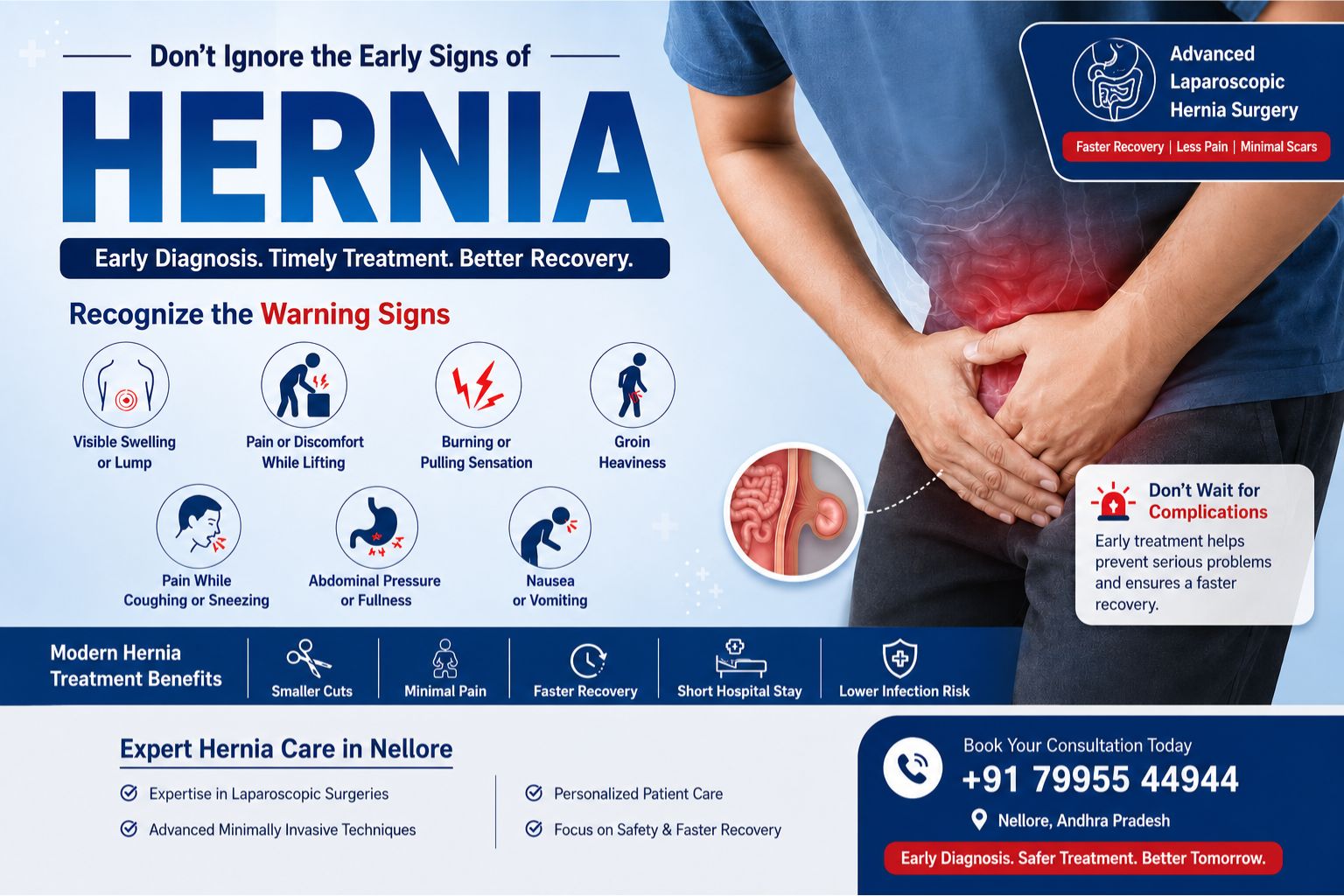
Introduction
A hernia may begin as a small swelling or mild discomfort, but if left untreated, it can gradually affect your daily life and lead to serious complications. Many people ignore the early signs of hernia because the pain may initially seem minor or temporary. However, timely diagnosis and proper treatment can help prevent complications and ensure faster recovery.
If you are experiencing abdominal swelling, groin pain, heaviness, or discomfort while lifting objects, coughing, or standing for long periods, it is important to consult an experienced hernia specialist at the earliest.
For patients looking for advanced and safe hernia treatment in Nellore, Dr. Nitesh Pagadala offers expert evaluation and modern laparoscopic hernia surgery options with patient-focused care and faster recovery support.
What Is a Hernia?
A hernia occurs when an internal organ or tissue pushes through a weak area in the muscle or surrounding tissue wall. Hernias commonly develop in the abdomen or groin region and may gradually increase in size over time.
While some hernias may remain painless in the beginning, others can cause noticeable discomfort and interfere with normal activities.
Common Types of Hernia
Understanding the type of hernia is important for choosing the right treatment.
1. Inguinal Hernia
This is the most common type and usually appears in the groin area. It is more common in men.
Common symptoms:
- Groin swelling
- Pain while lifting heavy objects
- Burning sensation in the groin
- Heaviness while walking
2. Umbilical Hernia
This develops near the belly button and may occur in adults or children.
Symptoms include:
- Bulge near the navel
- Discomfort during coughing or bending
- Swelling that becomes more visible while standing
3. Incisional Hernia
This may occur after previous abdominal surgery due to weakened muscles.
Symptoms:
- Swelling near surgical scar
- Pain during movement
- Visible protrusion
4. Hiatal Hernia
This occurs when part of the stomach moves upward through the diaphragm.
Symptoms:
- Acid reflux
- Chest discomfort
- Difficulty swallowing
- Bloating
Early Signs and Symptoms of Hernia You Should Never Ignore
Many patients in Nellore delay consultation because the symptoms initially appear mild. However, early diagnosis can prevent emergency surgery and complications.
Below are the most common warning signs.
1. Visible Swelling or Lump
One of the earliest signs of hernia is a noticeable bulge in the abdomen or groin.
The swelling may:
- Appear while standing
- Increase during coughing
- Reduce while lying down
Some patients notice the lump only after physical activity or lifting heavy objects.
If you notice any unusual swelling in the abdominal region, consulting a hernia specialist in Nellore is highly recommended.
2. Pain or Discomfort While Lifting
Pain during:
- Gym workouts
- Carrying heavy bags
- Bending
- Climbing stairs
can indicate weakening of abdominal muscles.
The discomfort may initially come and go but often worsens over time if untreated.
3. Burning or Pulling Sensation
Many patients describe hernia pain as:
- Burning
- Pulling
- Pressure-like discomfort
This usually happens because tissues are pushing through weak muscles.
4. Groin Heaviness
A feeling of heaviness or dragging sensation in the groin is another common early symptom.
This is especially noticeable:
- After standing for long periods
- During walking
- At the end of the day
5. Pain While Coughing or Sneezing
If coughing or sneezing causes pain in the abdomen or groin, it may suggest increased pressure on weakened abdominal walls.
This symptom should not be ignored, especially if accompanied by swelling.
6. Abdominal Pressure or Fullness
Some patients feel:
- Tightness
- Pressure
- Abdominal fullness
even after eating small meals.
This can occur in abdominal or hiatal hernias.
7. Nausea or Vomiting
In severe cases, hernia can become trapped or strangulated, reducing blood supply to tissues.
Emergency symptoms include:
- Severe pain
- Vomiting
- Fever
- Redness over swelling
- Inability to pass stools
Immediate medical attention is necessary in such cases.
Why Hernia Should Not Be Ignored
Many people assume hernia will heal naturally. However, untreated hernias usually increase in size over time.
Delaying treatment may lead to:
- Severe pain
- Intestinal blockage
- Strangulated hernia
- Emergency surgery
- Longer recovery period
Early consultation helps in safer treatment and better recovery outcomes.
Who Is at Higher Risk of Hernia?
Certain factors increase the chances of developing hernia.
Common risk factors:
- Heavy lifting
- Chronic cough
- Obesity
- Constipation
- Smoking
- Previous abdominal surgery
- Pregnancy
- Aging-related muscle weakness
People involved in physically demanding work should be especially careful.
When Should You Consult a Hernia Specialist in Nellore?
You should consult a specialist if:
- Swelling persists for more than a few days
- Pain increases during activity
- Lump becomes larger
- Daily activities are affected
- You experience nausea or severe pain
Early diagnosis helps doctors choose minimally invasive treatment options before complications develop.
Modern Hernia Treatment Options Available in Nellore
Treatment depends on:
- Type of hernia
- Size
- Symptoms
- Patient health condition
Today, advanced laparoscopic hernia surgery allows patients to recover faster with less pain and smaller scars.
Laparoscopic Hernia Surgery
Laparoscopic surgery is one of the most preferred modern treatment methods.
Benefits include:
- Smaller cuts
- Minimal pain
- Faster recovery
- Short hospital stay
- Lower infection risk
- Early return to work
Many patients in Nellore now prefer laparoscopic hernia surgery because of its safety and quicker healing process.
Open Hernia Surgery
In certain cases, open surgery may still be recommended depending on:
- Hernia size
- Previous surgeries
- Complicated hernias
An experienced surgeon evaluates the best option for each patient individually.
Recovery After Hernia Surgery
Most patients recover smoothly with proper post-operative care.
Recovery tips:
- Avoid heavy lifting
- Follow prescribed medications
- Walk regularly
- Eat fiber-rich foods
- Stay hydrated
Patients undergoing laparoscopic surgery often return to normal activities faster compared to traditional surgery.
Choosing the Right Hernia Specialist in Nellore
Selecting the right surgeon is important for:
- Accurate diagnosis
- Safe surgery
- Reduced complications
- Better long-term outcomes
When choosing a hernia specialist, consider:
- Surgical experience
- Expertise in laparoscopic procedures
- Patient reviews
- Hospital facilities
- Post-surgery support
Expert Hernia Care by Dr. Nitesh Pagadala in Nellore
Patients searching for trusted hernia treatment in Nellore often look for:
- Experienced surgeon
- Advanced laparoscopic treatment
- Personalized care
- Faster recovery support
Dr. Nitesh Pagadala is known for providing comprehensive gastrointestinal and laparoscopic surgical care with patient-focused treatment planning.
Why patients choose Dr. Nitesh Pagadala:
- Expertise in laparoscopic surgeries
- Advanced minimally invasive treatment approach
- Detailed patient evaluation
- Focus on safety and recovery
- Modern surgical techniques
- Compassionate consultation process
Patients from Nellore and nearby areas consult for:
- Hernia treatment
- Gallbladder surgery
- Gastrointestinal disorders
- Laparoscopic procedures
Hernia Consultation and Appointment Information
If you are experiencing symptoms such as:
- Groin swelling
- Abdominal pain
- Burning sensation
- Discomfort while lifting
it is important not to delay medical evaluation.
Early consultation can help avoid complications and allow safer minimally invasive treatment options.
Consultation may include:
- Physical examination
- Ultrasound or imaging if needed
- Surgical evaluation
- Personalized treatment plan discussion
Frequently Asked Questions About Hernia
1) Is hernia surgery painful?
Modern laparoscopic techniques help reduce pain significantly compared to older surgical methods.
2) Can hernia heal without surgery?
Hernias usually do not heal naturally and may worsen over time if untreated.
3) How long does recovery take after hernia surgery?
Recovery varies depending on the procedure and patient condition. Many patients resume routine activities within a few weeks after laparoscopic surgery.
4) Is laparoscopic hernia surgery safe?
Yes, when performed by an experienced surgeon, laparoscopic surgery is considered safe and effective for many hernia cases.
5) When should I seek emergency treatment?
Immediate medical attention is needed if you experience:
- Severe pain
- Vomiting
- Fever
- Sudden swelling changes
- Redness around hernia
Final Thoughts
Hernia symptoms may begin quietly, but ignoring them can lead to serious complications over time. Early diagnosis and timely treatment are important for safer recovery and long-term health.
If you or your family member is experiencing symptoms such as swelling, abdominal discomfort, groin pain, or heaviness, consulting an experienced hernia specialist in Nellore can help you receive the right treatment at the right time.
Advanced laparoscopic hernia surgery now offers patients:
- Less pain
- Faster recovery
- Minimal scarring
- Improved comfort
Seeking timely medical advice can make a significant difference in recovery and overall quality of life.
 Emergency No. :+91 72075 17771